
The hours that go into moving work between your apps are the ones you get back.

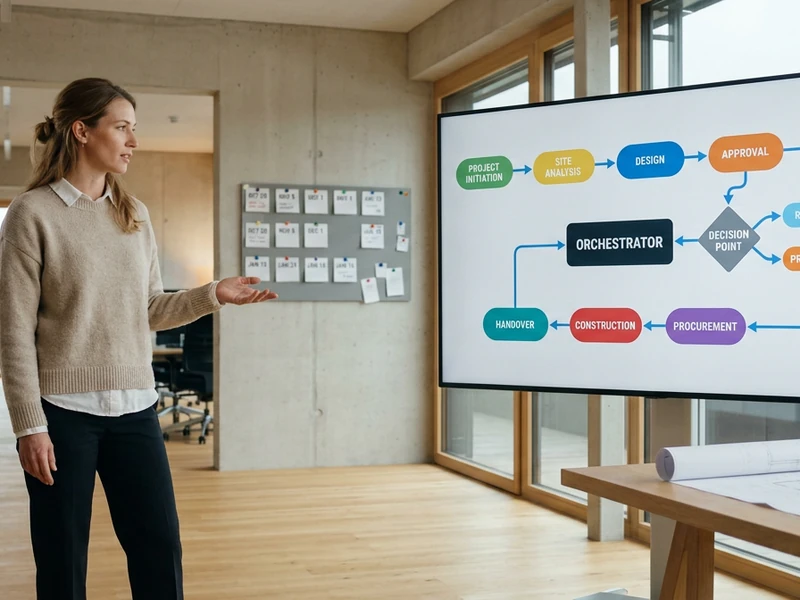
An Austrian KMU runs the same processes a large enterprise does, with nobody spare to fix them. So the first step is not a tool. It is a look at where the week actually goes: the report assembled by hand every Monday, the offer copied between three systems, the triage nobody has time to document. One recording week produces a scored list, and the list decides what gets built.

The bar those builds are held to is the enterprise one. The first integration ships governed, with an approved model per use case, every call logged with what it cost, and the figures readable in a control centre rather than a spreadsheet. Nothing gets replaced: the bookkeeping, the invoicing tool and the supplier portal stay where they are, and the AI is the side that adapts.

Compliance is settled in the same pass, before licences are bought, so there is no halfway stop after the spend. Where agents touch personal data or a meeting gets recorded, the lawful basis and the consent notices come first.

The workflows are built with the people who will own them, over Teams rather than on site. No travel day stands between a question and an answer, so a session can be called the morning it comes up, and the sessions repeat until nobody needs to ask.

Frequently Asked Questions

What do the first two weeks actually look like?
A recording week, one consolidation, one workshop, and then a decision you are still free to walk away from. Nothing is bought, installed or migrated in that window, which is the whole reason the phase is safe to stop. The recording is done by the people who perform the tasks rather than by an analyst watching them, so the week costs attention rather than calendar days. The Value Discovery & Compliance page carries the per-person time, the scoring workbook and the nine-question path behind every route decision.
Do we have to replace the systems we already run?
No, and the reason is commercial before it is technical: work that only pays off after a migration cannot start this quarter, and a proposal that cannot start is not one we make. The apps you already run keep running unchanged, under the licences and the administrators they already have, and the agent is the side that adapts. Where a task genuinely has no answer short of a replacement, the Value Discovery & Compliance page sets out what happens to it.
What does this cost to run, and how do we know before the invoice?
Two lines, both readable in advance. Hosting is a fixed monthly server price rather than a consumption bill. Model usage is the variable part: each use case pins an approved model, every call is logged with its token cost, and those figures are read from the running systems into a control centre of your own. That control centre ships with the first integration rather than after a pilot, because otherwise the first surprise arrives before the evidence does.
Where does our data live, and what about DSGVO?
The DSGVO and EU AI Act position is settled before AI reaches company data, not afterwards. Microsoft 365 content stays in the tenant that already holds it, under its own identity, retention and residency policy. Applications run as containers in German and Finnish data centres, with database access scoped so each tenant reaches only its own data. The review names the data-privacy conditions per connected service and settles which licence tier each one runs under, because that tier, not the product page, sets what may be done with company content.

What We Can Build For You

Systems already running for other businesses, ported to yours