
Visits Are Falling, WebMCP Draws In the Agents

The buying decision now happens inside the assistant, and the chat shows whoever has made their information and processes available to the agent.
Search visits are declining
In March 2025, the Pew Research Center tracked what more than 900 US adults clicked on in Google search results. When an AI summary appeared above the results, they clicked through to a regular result only 8 percent of the time. Without a summary, that figure was 15 percent. Once Google answers the question itself, close to half of the clicks a website would otherwise get simply disappear.
At the same time, the traffic assistants generate on their own is growing. HUMAN Security measured that traffic from AI agents and browsers with a built-in agent rose 7,851 percent year over year in 2025. More than 95 percent of it fell into retail, streaming and media, and travel and hospitality. Cloudflare reported on 3 June 2026 that for the first time, more requests on its network came from programs than from people, 57.5 percent. Cloudflare attributes the rise mainly to agents that read thousands of pages on behalf of an assistant to answer a single question.

Whoever still reaches a website through an assistant buys far more often, according to Adobe. On US retail sites, these visits lead to a purchase 60 percent more often than visits from other sources, and their number grew 62 percent in July 2026 compared with the year before. These visitors have already made their choice in the chat.
The assistant recommends whoever it can pull information from
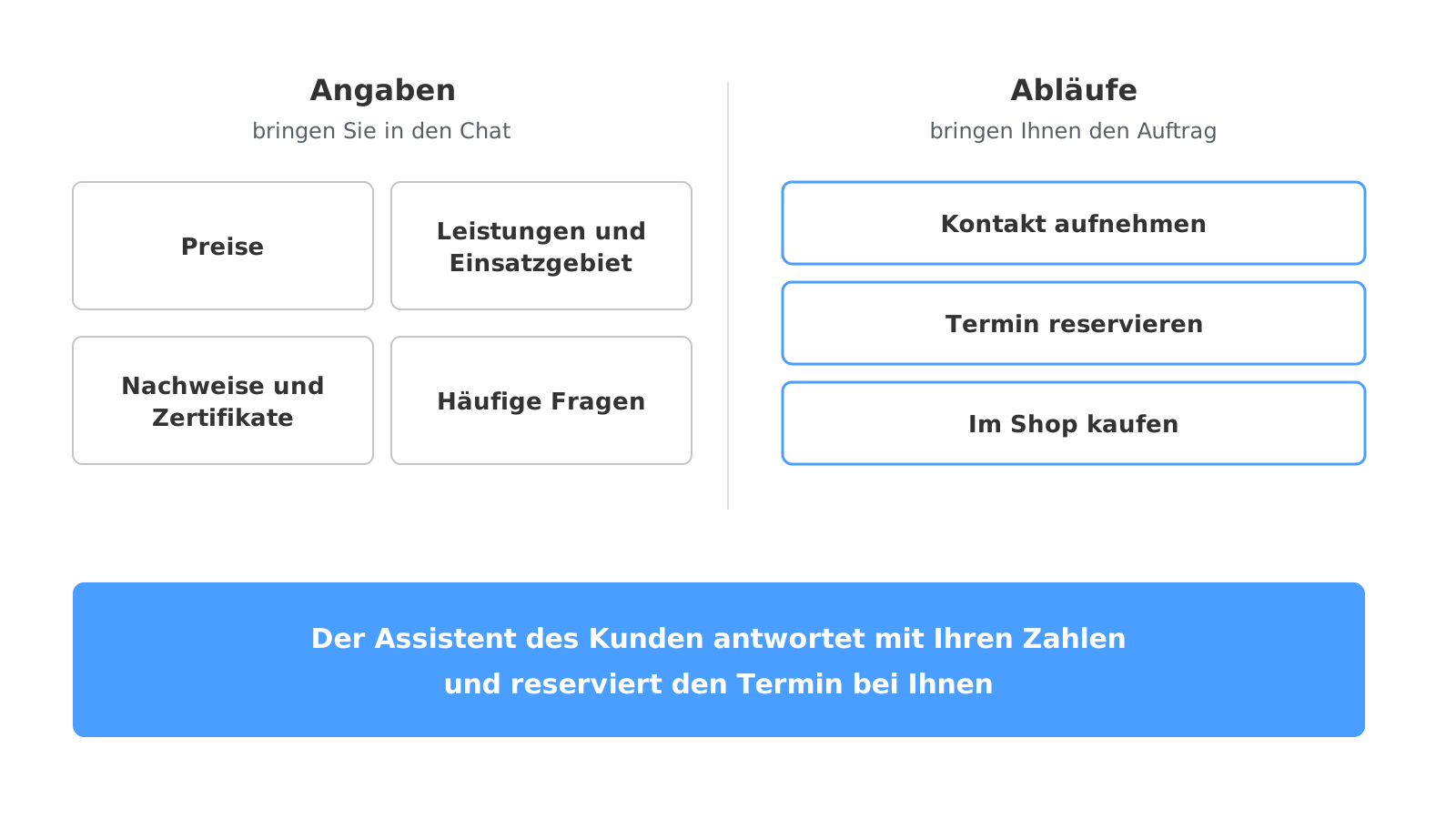
Whoever makes their prices, services and proof available so an AI agent can retrieve them shows up in the chat. If the agent cannot find a business’s price, service area or opening hours, it names the competitor whose information it can find instead.
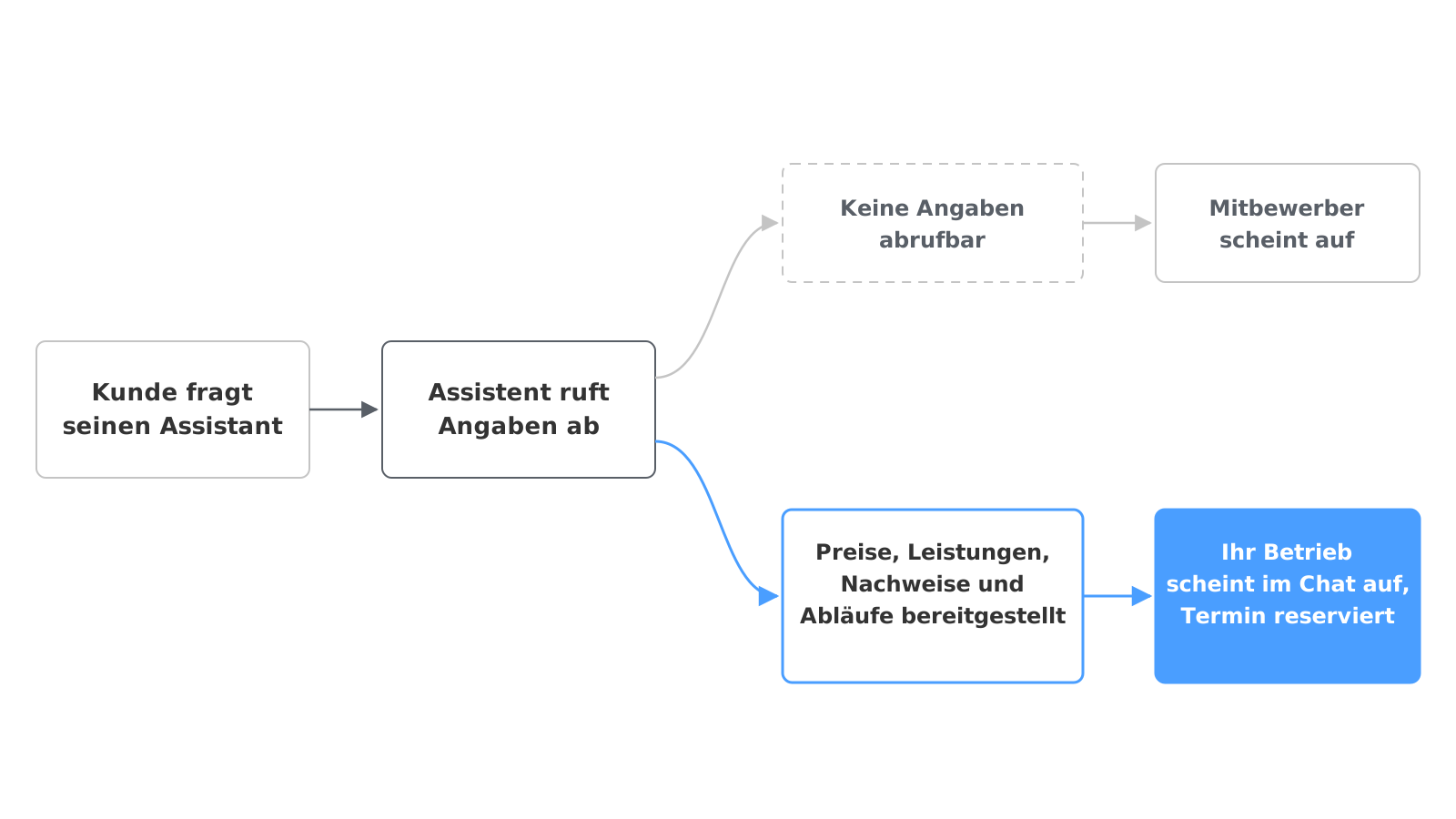
Whoever also opens up processes, from contact through booking to a purchase in the shop, gets the job directly through the assistant. The customer tells the chat they’ll take Thursday’s slot, and the assistant books it with the business.
Proof builds the agent’s trust
Certificates and processes that a business makes available to the agent raise the agent’s trust in that business. That includes a master craftsman’s certificate, manufacturer training, the terms of a warranty, and the steps of a repair from the first call to the invoice. An assistant booking an appointment for its customer would rather give that slot to a business whose proof it can check for itself.

What an assistant learns on integrations.at
Our own website shows what that looks like. If a customer’s assistant asks about our prices, it gets the rate per AI hour for software engineering, the day rate for training, and the payment terms. If it asks for proof, it gets every Microsoft certification with its issue date and a link to check it directly with Microsoft. It finds the training courses with their level and day rate, the frequently asked questions for every service with their answers, and the way to reach us. It fills out the contact form for the customer, though the customer still has to submit it themselves.
On WebMCP Verify our page scores 100 out of 100. How that works on the technical side is covered in Agent-Ready Websites; the engineering behind it is part of MCP servers for your systems.
How to check your own site
Lighthouse is built directly into Chrome and scores your page’s load time, discoverability and accessibility. WebMCP Verify opens your address and shows what an agent finds there. Google’s Chrome extension Model Context Tool Inspector lists which functions your page offers the customer’s AI assistant.
After that, take the five questions a customer asks before buying from you, and write the answers the way you’d give them on the phone. Those answers are what we build on with you, until an assistant can book an appointment with you directly.
Sources
- Google users are less likely to click on links when an AI summary appears in the results
- AI-referral traffic spending, converting more than counterparts
- HUMAN Security's 2026 State of AI Traffic & Cyberthreat Benchmark Report Signals a New Internet Era: Automation Growth Now Outpaces Humans
- Bot Traffic Passes Humans Online: Cloudflare Says Agentic AI Drove 57.5% Share
- Lighthouse overview
- WebMCP Model Context Tool Inspector
- WebMCP Verify