

Agents and Workflows

Agents call your tools, MCP servers and existing APIs and run on the model provider you choose. Workflows connect them into one process, step by step or as a graph. The harness agent brings planning, context compaction, file access, memory and tool approval.

Orchestration

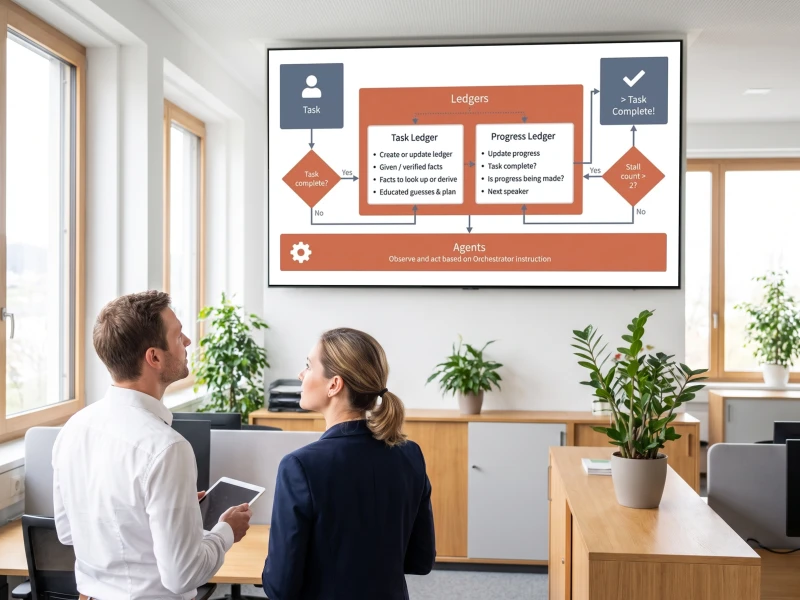
Agents coordinate the way the process runs: one after another, in parallel, by handing off to the next agent based on context, in a shared conversation, or under a manager agent that steers specialized agents. Processes too large for one agent get the pattern that fits them.

Human-in-the-Loop

A run saves its progress at every step and picks up where it paused when it outlasts your session. Approval-required tools pause the workflow until a person reviews the call. A person can add information mid-run as well. Workflow events make every step observable.
Progress Stays Saved
a run that outlasts your session picks up exactly where it paused
Cost Visible Live
each pipeline stage shows its own spend, streamed live while the run is still going
Your API as a Tool
the REST API you run today becomes the tool an agent calls, unchanged

Enterprise Multi-Agent System

Agents and Workflows 2 steps
01

Agents, Harness and Workflows

Agents call tools and MCP servers and support multiple model providers. The Harness Agent brings planning, todo tracking, context compaction, file access and memory, and tool approval. Workflows connect both through functional and graph-based execution paths.
02

Memory and Middleware

Agent sessions hold the state of each conversation, with context providers as the agents' memory. Middleware intercepts every agent action. MCP clients wire in your tools directly. All of it runs on .NET, Python and, in preview, Go.
Orchestration 2 steps
03

Sequential, Concurrent and Handoff

In Sequential, agents run one after another in a fixed order. In Concurrent, they work on the same task in parallel. In Handoff, they transfer control to the next agent based on context, with no central manager steering every step.
04

Group Chat and Magentic

In Group Chat, agents coordinate in a shared conversation. In Magentic, a manager agent coordinates specialized agents dynamically. Both patterns support human-in-the-loop through tool approval.
Human-in-the-Loop 2 steps
05

Saved Progress

Workflows branch into parallel steps and join their results again, with conditions deciding the path. Progress is saved after every step, so a run resumes where it paused. Events report every step as it happens.
06

Tool Approval

Agents use approval-required tools that pause the workflow until a person reviews the call. When the workflow needs more information, it asks a person mid-run and continues with the answer.

Frequently Asked Questions

What is an agentic business process?
It is a process where the agent does the reading, the matching and the drafting, and a person owns the approval. One delivered example takes the monthly Excel worklist the office produces, matches the buildings, and proposes a full month of technician routes grouped by location with real driving times from Google Maps. Every record waits for a person to review the proposal before it is saved, and every run keeps a history entry that explains the result later.
How do agents reach business data without rebuilding the system?
Through Model Context Protocol on top of the existing API. One planning platform exposes seven schedule tools over its live database, with tool descriptions written in the office's own German vocabulary so fuzzy employee and building names resolve correctly, connected to Claude as a custom connector. Staff ask in the chat who has an appointment on a given date. The connector runs against the staging slot before it is pointed at production.
How does a person approve what an agent writes?
The write path stays with the person. In the delivered pattern the agent drafts and returns an interactive form inside the chat client. That form calls the single save tool behind it. Document intake works the same way: an extracted record carries a review flag. The source document stays archived in blob storage until a person confirms it. Approval is built into the system as a step.
Who decides which model runs, and what does a run cost?
An administrator does, in a model registry with a default per use case and AI credits granted per user. The effect is measurable: on one drafting feature a model change made suggestions roughly ten times faster and four times cheaper without touching the feature. Cost stays visible at the run level too, because each pipeline stage writes one JSON line with its token cost, and the same trace streams to the screen as a live readout.